Monday, August 24, 2026

Void Stranger

Void Stranger Cover
Only a simple memory will remain.

Void Stranger is one of those games people tell you to play without actually telling you what it is. A game you absolutely must not be spoiled on, but it's really good and you just have to trust them. These people are speaking nothing but the truth and I am one of them.

If that's not enough to convince you to drop everything immediately and go spend $12, let me give you my elevator pitch.

Void Stranger is primarily a puzzle game about moving tiles and pushing blocks around. The puzzles are well made, use interesting mechanics, and challenged me without being too hard to solve. There's more going on with this game of course, but if you really don't like puzzles then unfortunately this game might not be for you.

What makes Void Stranger stand out is everything surrounding the puzzle based gameplay. The visual style and art direction are simple yet striking. The way the narrative is slowly revealed pulled me in and never let go. The game just has an incredible atmosphere and a palpable sense of mystery.

The reason fans are so spoiler avoidant is that a huge part of the game is built around the player's own sense of discovery. It's not enough to watch a playthrough; you have to take each step yourself, come to your own conclusions, and put them to the test. Sometimes it might feel like groping around in the dark, but there is so much waiting for you if you keep reaching out to it.

If you like piecing together stories over time, if you are captivated by the mystery of the unknown, if you appreciate the medium of games as art, you will enjoy Void Stranger.

Sunday, August 23, 2026

Helen's Mysterious Castle


Helen's Mysterious Castle is a charming little RPGMaker game that gets a lot of mileage out of its limited scope. It never blew me away in any regards, but it never needed to for it to leave an impression on me. 

This article, How To Make Good Small Games, has had a huge influence on how I look at games as a medium and I highly recommend you read it. In essence it describes how a game's success is independent from its scope, and that a good game makes the most of what it is rather than how it compares to larger titles. By this metric, Helen's Mysterious Castle was a resounding success in my eyes.

The story is very barebones at first, but I was really moved by how it reveals itself. You start the game knowing almost nothing about who or where you are, but once you reach the town you learn that the people there are in a similar situation. There's this one kid that talks about wanting to see the sky that they've heard so much about, but they can't as long as the townspeople are trapped on this floor of the dungeon. Suddenly the feeling of being dropped in a new game with no context was reshaped as the wonder of a wider world I had yet to see.

When I opened the way to the next floor and finally saw the sky, I was honestly a bit emotional. There was no great spectacle nor any deep character writing, but hearing the music and taking in the scenery was enough to fill my imagination.

banger title screen btw

It really impressed me how this game turned a couple lines of dialogue from generic town NPCs into such a small, yet breathtaking moment. The game is filled with these gentler moments of levity or drama that might not match the intense highs and lows of blockbuster titles, but achieve exactly what the game needs to be an enjoyable experience all the way through.

I also love how Helen's Mysterious Castle is in conversation with RPGMaker as an engine and the other games that use it. The game embraces its identity as an RPGMaker game while playing with and subverting the usual genre conventions.

The default engine sprites are embellished with custom animations that still blend with the original aesthetic. The stock hero character found in countless hobby projects appears as a minor antagonist, complete with self-righteous attitude and ridiculously named sword. The monster bosses are silly and sympathetic, with a plotline that ends up intriguingly similar to Undertale.


All in all I really enjoyed my time with this game and I consider it a shining example of what a good small game can be. I hope I can capture some of Helen's magic in my own projects moving forward.

Sunday, August 2, 2026

You Should Read Higurashi Right Now

Higurashi Chapter 3 Cover

Higurashi When They Cry is one of the finest, most thought provoking stories I've ever had the pleasure of experiencing.

To be entirely upfront, I am currently still reading the fifth of Higurashi's eight chapters/arcs. However, I can assure you with full confidence that this visual novel is of incredible quality and absolutely worth the time investment.

Despite hearing similar assurances from others I was skeptical about starting the series at first. All I knew was that the novel was about horror, it was really long, and that the first few hours were really slow and painful to get through. At the time I felt I had very little interest in horror, but I was told to persist. I was intimidated by the sheer length of it all, but I was told to persist. I agreed very quickly that the first few hours felt like pulling teeth, but I was told to persist.

And with enough persistence, I realized everyone was right. Higurashi really is something special.

You see, Higurashi is not "just a horror game" as I had come to believe. The horror is very well done of course, but the true core of the story lies in its incredibly layered characters and the complex relationships that bind them. It's a slow burn that builds up questions in your mind and asks you to engage with the cast as deeply as you can. It is equal parts mystery, drama, and tragedy—all of which are expertly delivered through its focus on human connections.

Higurashi utilizes every possible strength of its medium as a visual novel. Every factor of its presentation is crafted for storytelling, down to the chapter structure itself. Every twist, every revelation, and every heartfelt moment leaves me in awe. Even the campy slice of life sections which I found torturous at first became genuinely entertaining once I came to know the characters better.

This story is one hell of a rollercoaster ride, always leaving me surprised and delighted. If you are at all interested I implore you to give it a chance. Speed through the rocky start if you have to and try to finish the first arc at least. You might be surprised how deeply it can sink its hooks into you.


P.S.
If using Steam, I recommend downloading the 07th mod to play with the original graphics and sounds. I also recommend keeping the voice acting on because it's really well done. Oh, and read all the TIPS as they appear, they're important.

Friday, June 19, 2026

Blue Period: Yuka and Identity

Just a warning, there's brief mention of abuse and suicidal ideation, but I don't get into detail.


Blue Period is a manga series turned anime about art and painting, specifically about a high schooler that decides to upend his current path in life to bet everything on art school.

Blue Period manga volume one cover
I highly recommend the series btw

Naturally a story about art students has a lot to say about being true to yourself and following your passions against all odds, which is a message that speaks a lot to me personally. I could probably write a whole post just about that, but today I'm gonna talk about Yuka.
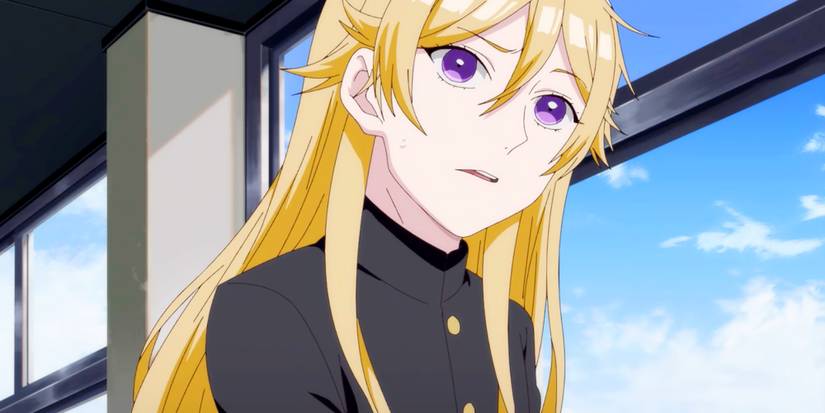
A pic of Yuka from the anime
that's yuka

So funny thing, the first time I watched Blue Period like four(?) years ago I didn't get past episode four. Not because it's bad! I really really liked it! I'm just bad at finishing things and only revisited the series now. But, I remembered Yuka after all these years for their depiction as an openly and explicitly queer character.

Here's the real kicker, four years ago I didn't even know I was queer! A lot has changed since I first started the show, and coming back to the series I was really interested to see how my interpretation of Yuka changed (and maybe get a more solid idea of what their whole gender situation actually was).

Suffice to say, the gender situation is complicated. I do not feel that it is right to put a hard label on Yuka, and although I will be discussing a lot about their identity this post is not about declaring their gender. To that end, I'll mostly be referring to Yuka with they/them pronouns for the sake of not committing to an answer and only sometimes she/her because that answer makes me happy.

With that disclaimer out of the way, let's set some context.

Ayukawa "Yuka" Ryuji is a classmate and fellow art student to protagonist Yaguchi Yatora. They describe themselves and are described by others as a crossdressing male who is attracted to other men. They are confident, a bit abrasive (especially with Yatora), and seemingly indifferent to the opinions of others.

A Gif of Yuka in the anime opening that I really like
she's sooooo cool

Pretty early on we get a couple scenes that further cement what we know about Yuka and their identity. Yatora doesn't really understand Yuka, nor does he really get along with them. He always calls them "Ryuji" which Yuka expressly does not appreciate. Yuka gets flirty with a guy they barely know and sets up a date, only to get rejected and heartbroken once they make it clear they're a crossdresser.

Yatora tries to comfort Yuka, but he doesn't really understand their feelings, even going on to say they'd probably have better luck with romance if they dressed like a guy.

A manga panel where Yuka says "But if I have to be whatever society's definition of "acceptable" is... I would die."

Yuka knows what they want and will not hide who they are, but they still suffer and struggle with a world that does not accept them.

After this point Yuka takes a step back from the spotlight, with the story focusing on Yatora's growth as an artist and preparations for the university acceptance exams. They are occasionally present, but as the series goes on they grow concerningly distant from the main cast, only showing the audience glimpses of their current struggles.

Yuka begins talking, acting, and dressing more femininely. I think Yuka's really cool when they express their femininity, but this is clearly framed by the story as a possibly alarming change in demeanor. They quit art school, face abusive parents at home, and express feelings of wanting to be taken out of the world.

When Yatora reaches out to them, Yuka likens their situation to a person drowning in the sea and challenges him to jump in and drown as well if he really wants to help.

Yuka stands in front of a roaring train. She says "Will you come with me? To drown in the sea?"
All this talk of jumping while a train passes ominously by

An important note for later is how another character interprets and explains this drowning metaphor to Yatora. When a person is drowning in the sea the smart thing to do is grab a lifesaver, but you'd never truly understand that person's feelings unless you experience the suffocating darkness of the ocean yourself.

After a midnight train ride to the beach the two end up having a heart to heart. Separated by a divider, they draw nude self portraits in a cheap motel room. Nudity is a pretty obvious and very often used metaphor for opening up, being vulnerable, and looking at your true self, but I really like how its handled here.

While Yuka explains what's been going on with their life, particularly their struggles with identity and direction, Yatora faces his own insecurities reflected in the mirror.

Yuka sees Yatora as a model student (to an annoying degree), but he sees himself as pathetic and talentless, someone who has to work his ass off just to compete.

Yatora always thought Yuka never cared about others' opinions, but they're actually always worried about what people think. It's a constant struggle for them to be who they want to be, but sometimes they don't even know what they truly want.

This is what it means for Yatora to jump in and drown with Yuka. He is only able to understand their struggles and insecurities by facing himself, and through this understanding they both realize that their perceptions of each other were completely different from their perceptions of themselves.

Yuka and Yatora submerged in the sea

Yuka goes on to confess that they've loved a girl before, but felt that maybe things would be easier if they only liked men. With his new understanding, Yatora is able to point out that Yuka's increasing performance of femininity may also be a way of "making things easier" by forcing themselves into a category that "makes more sense".

And this is why I don't believe in finding a proper label for Yuka's identity. I know what it feels like to be unsure of who you are or who you want to be. 

Is there something transgender going on with me or am I some kind of poser? Do I actually love him or is it all in my head? Maybe it would be easier if someone could diagnose me, put a label on me, so I fit neatly in a box.

But the beauty of queerness is that there's no need for boxes.

Yuka is confident, a rebel who shows the world who they are proudly, and yet they still worry about what the world thinks. In a roundabout way, by embracing their queerness and nonconformity they just ended up trading the label the world tries to force on them with a queer identity they try to force on themselves.

So maybe the technically "correct" answer is that Yuka is a gender nonconforming bisexual man. But my point is that there is no point in settling on an answer like this. To put Yuka in a box like this is to deny their struggles with uncertainty, the nuances of their own personal experiences, and the journey of self reflection we all go through.

Much like an artist can chase their dreams against all odds, you should be free to decide who you are without regards to what the world thinks is sensible. Maybe you aren't sure of your path or maybe your feelings will change with time, but that journey is entirely yours to make.

That is what Yuka's story means to Blue Period and that is why she is literallyyy me fr fr.


Yuka says "It's okay to be arrogant. Start thinking that you can do it, too!"